
The Fundamentals of Inductance & Impedance - A Comprehensive Guide
In the ever-fascinating world of electronics, understanding the flow of electricity is paramount. But beyond the basic principles of voltage and current, two key concepts - inductance and impedance - play a crucial role in shaping circuit behavior. This comprehensive guide will demystify these concepts, exploring their definitions, how they relate to each other, and their practical applications.
What is Inductance?
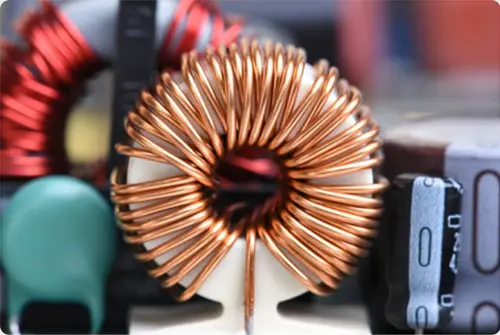
Inductance is the property of an electrical conductor that opposes changes in current flow. It is the fundamental principle behind inductors and transformers. When current flows through a coil of wire, it creates a magnetic field around it. If the current changes, the magnetic field also changes, inducing a voltage that opposes the change in current. This phenomenon is known as self-inductance.
Understanding Impedance
Impedance is the total opposition that a circuit presents to the flow of alternating current (AC). It is a combination of resistance (which opposes current in both DC and AC circuits) and reactance (which opposes changes in current or voltage in AC circuits). Reactance comes in two forms: inductive reactance (from inductors) and capacitive reactance (from capacitors).
Relationship Between Inductance and Impedance
Inductance and impedance are closely related in AC circuits. Inductive reactance, which is the opposition to current flow caused by an inductor, is directly proportional to both the frequency of the AC signal and the inductance value. This relationship is expressed by the formula: XL = 2πfL, where XL is inductive reactance, f is frequency, and L is inductance.
Practical Applications
Understanding inductance and impedance is crucial for designing filters, transformers, power supplies, and many other electronic circuits. At MK Electronics, we specialize in manufacturing high-quality inductive components including transformers, coils, and inductors for a wide range of applications.
Whether you're designing a power supply, audio equipment, or RF circuits, a solid understanding of these fundamental concepts will help you create more efficient and effective designs.